12 SEO Mistakes Nigerian Businesses Should Avoid to Grow Online
Search engines have become an important way for customers to discover businesses, compare services and find solutions to their needs. In Nigeria, where many consumers use smartphones to search for products, professionals and services, having a website is a valuable step towards building an online presence. However, simply launching a website does not guarantee that potential customers will find it on Google.
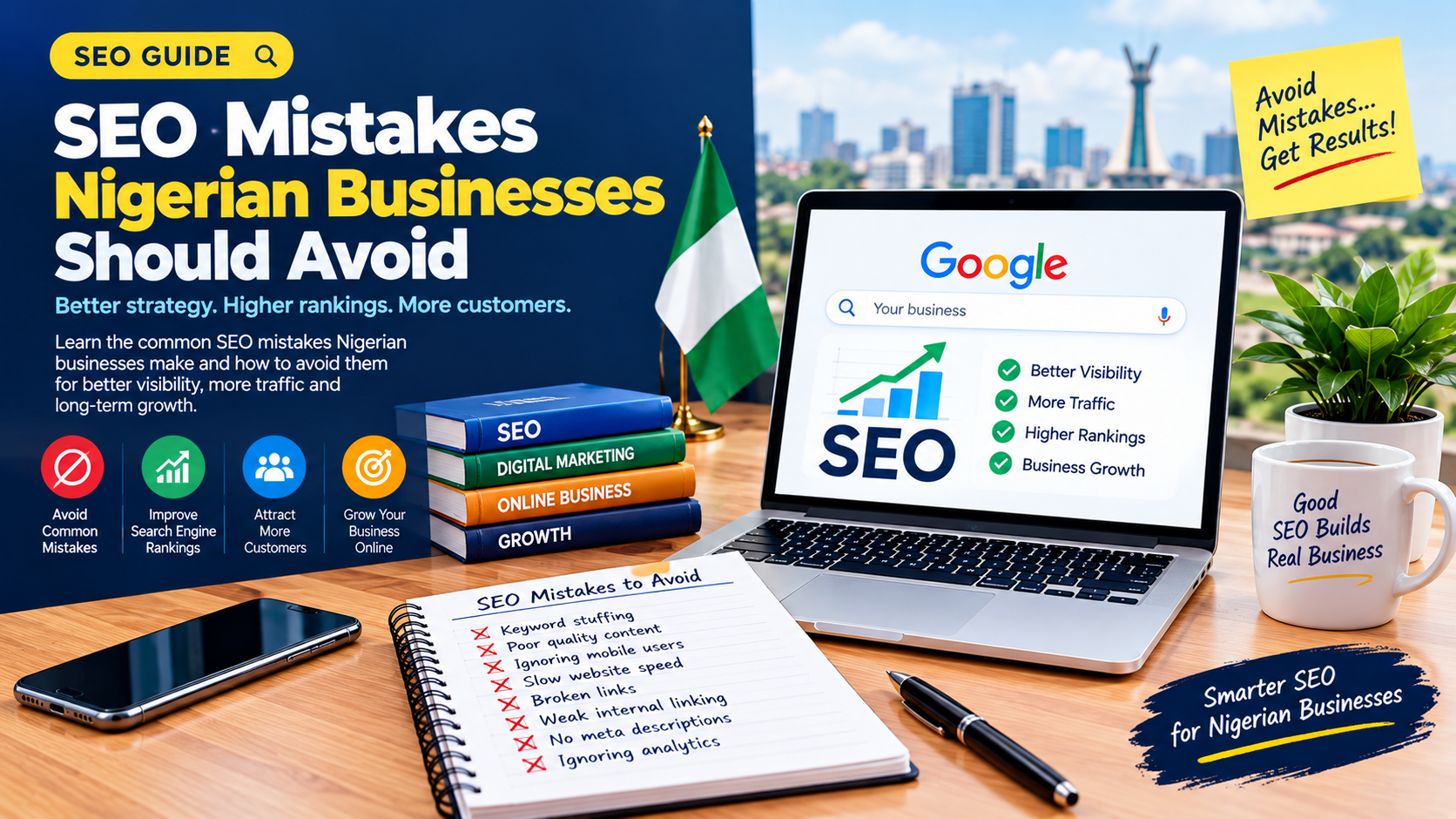
Many businesses struggle with search visibility because of avoidable search engine optimisation (SEO) mistakes. These include targeting the wrong keywords, publishing weak content, neglecting local SEO, ignoring website speed and failing to monitor website performance.
The good news is that most of these problems can be identified and corrected with a practical SEO strategy.
In this guide, we explain the most common SEO mistakes Nigerian businesses should avoid and the steps they can take to improve their websites, attract relevant visitors and generate more business opportunities.
What Is SEO, and Why Does It Matter to Nigerian Businesses?
Search engine optimisation is the process of improving a website so that search engines can understand its content and users can discover relevant pages through unpaid search results.
For example, a person searching for “web design company in Kano” may be looking for a provider who can build a business website. A well-optimised website that clearly explains its services, location and experience has a better opportunity of being considered for relevant searches.
SEO can help Nigerian businesses:
- Reach people actively searching for their products or services.
- Improve their visibility in relevant Google search results.
- Build trust by providing useful and accurate information.
- Attract potential customers beyond their immediate network.
- Reduce dependence on paid advertising over time.
- Support enquiries, sales and long-term business growth.
SEO is a long-term process, and no legitimate strategy can guarantee a first-page position. However, avoiding common mistakes can help businesses establish a stronger foundation for search visibility.
1. Targeting the Wrong Keywords
One of the biggest SEO mistakes Nigerian businesses make is choosing keywords without understanding what their potential customers actually search for.
A company might repeatedly use broad terms such as “technology,” “fashion” or “business services” without targeting the specific searches that could bring interested customers to its website.
For instance, a business selling office furniture in Kano may benefit more from relevant searches such as “office furniture supplier in Kano” than from trying to rank for the broad term “furniture.”
How to avoid this mistake
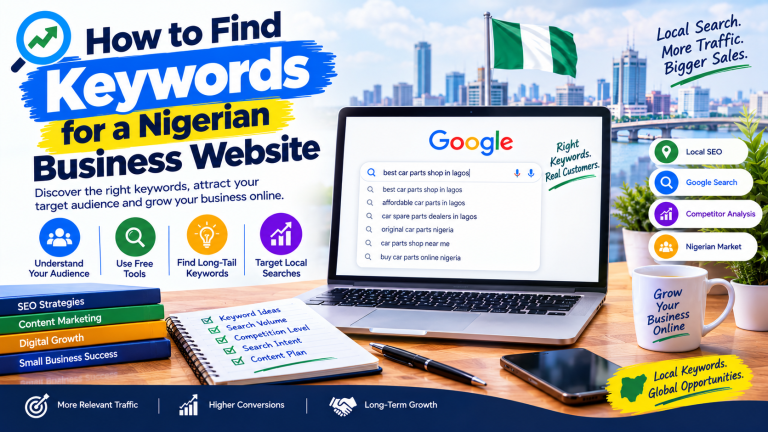
Start by identifying the products, services, locations and problems associated with your business. Think about the exact phrases a customer might type into Google before making a purchase or requesting a quotation.
Use tools such as Google Search Console, Google Trends and Google Keyword Planner to investigate search queries and keyword opportunities.
Consider these examples:
- A plumber: “plumber in Abuja” or “emergency plumbing services in Abuja.”
- A fashion designer: “custom native wear in Lagos.”
- A digital agency: “WordPress website development in Nigeria.”
- A school: “private secondary schools in Kano.”
Choose keywords that match your actual services and the searcher’s intent. Avoid targeting a location or service you do not genuinely cover.
2. Stuffing Keywords into Website Content
Keyword stuffing happens when a website repeats a keyword excessively in an attempt to manipulate search rankings.
For example, a paragraph that repeatedly says “best website designer in Nigeria” without adding useful information is difficult to read and can appear spammy.
Repeating a keyword does not automatically make a page more relevant. Google advises website owners to create helpful content for people and avoid practices intended to manipulate search systems.
How to avoid this mistake
Use your primary keyword naturally in important places, including:
- The SEO title and main heading, where appropriate.
- The opening section of the content.
- Relevant subheadings.
- The page URL, where practical.
- The meta description.
- Image alt text when it accurately describes the image.
Include related terms where they make sense, but prioritise clarity and usefulness over keyword frequency.
Write as though you are explaining your product or service to a real customer. If a sentence sounds unnatural when read aloud, rewrite it.
3. Publishing Thin, Duplicate or Unhelpful Content
Some businesses create website pages with only a few generic sentences. Others copy descriptions from competitors or publish several pages that say almost exactly the same thing.
Such pages may fail to answer customer questions or explain why a business is worth choosing.
For example, a web development company should do more than publish a page saying, “We offer professional website design at affordable prices.” Potential customers may also want to understand the services offered, the development process, the type of businesses served and how to request a quotation.
How to avoid this mistake
Create original, useful content that demonstrates your knowledge of the subject.
For important service pages, explain:
- What the service involves.
- Who the service is suitable for.
- The problems it solves.
- What customers can expect from your process.
- Relevant examples, case studies or portfolio projects.
- Frequently asked questions.
- How interested customers can contact you.
You can also publish helpful articles that answer common customer questions.
For example, a Nigerian accounting firm could publish a guide explaining the documents small businesses should prepare for bookkeeping, while a digital agency could explain how to choose a domain name.
Do not add words simply to reach a particular word count. Google’s guidance does not prescribe a universal minimum word count for ranking. The aim should be to answer the reader’s question comprehensively and accurately.
4. Ignoring Local SEO
Local SEO is particularly important for businesses that serve customers in specific cities, states or neighbourhoods.
A business may have a good website but still miss local opportunities because it does not clearly communicate where it operates or maintain accurate business information online.
For example, a restaurant in Kano, a repair service in Kaduna or a law firm in Abuja may need to reach people searching for services in those areas.
How to avoid this mistake
If your business is eligible, create or claim your Google Business Profile and keep its information accurate.
Important actions include:
- Use your correct business name and category.
- Provide accurate contact details and opening hours.
- Add your real business address if customers visit that location.
- Define service areas accurately if you operate as a service-area business.
- Upload genuine photographs of your premises, team or work.
- Encourage genuine customer reviews and respond professionally.
- Create useful website pages for the locations you genuinely serve.
Include location information naturally in relevant page titles, service descriptions and contact pages.
Google explains that local results are influenced primarily by relevance, distance and prominence. Completing your profile can help Google understand your business, but it does not guarantee a particular position.
Do not create multiple misleading location pages or fake business addresses to target more cities.
5. Having a Slow Website
Website speed affects how comfortably visitors can use your website. A slow page can frustrate potential customers, particularly those browsing on mobile devices or dealing with limited connectivity.
For a Nigerian business, this can mean a visitor abandoning a service page before finding the telephone number, product details or enquiry form.
How to avoid this mistake
Review your website using tools such as Google PageSpeed Insights and investigate the recommendations relevant to your site.
Practical improvements include:
- Compressing images and using suitable formats such as WebP.
- Avoiding oversized images that display at small dimensions.
- Removing unnecessary plugins and scripts.
- Choosing reliable hosting that meets your website’s needs.
- Enabling appropriate caching.
- Reducing excessive third-party tracking scripts.
- Using a content delivery network where it makes sense.
- Testing important pages on mobile devices and slower connections.
If you use WordPress, check whether your theme, plugins, images and hosting configuration contribute to slow loading.
Do not install several performance plugins without testing them. Conflicting settings can sometimes cause display or functionality problems.
6. Failing to Optimise for Mobile Users
Many customers discover businesses through mobile searches. A website that looks attractive on a desktop computer may become difficult to use on a smartphone if text is too small, menus are awkward or important buttons are hidden.
Google uses the mobile version of a website’s content for indexing, making it important to ensure that mobile visitors can access the same essential information.
How to avoid this mistake
Use a responsive website design that adapts to different screen sizes.
Check that:
- Text is readable without zooming.
- Navigation menus are easy to operate.
- Buttons and links are comfortable to tap.
- Forms work correctly on phones.
- Images fit the screen.
- Important content is available on mobile.
- Contact and enquiry options are easy to find.
Test your homepage, service pages, product pages and contact page on several mobile screen sizes.
A mobile-friendly website supports a better user experience and helps search engines access the content they need to understand.
7. Neglecting Page Titles and Meta Descriptions
Page titles help users and search engines understand what a page is about. Meta descriptions provide a short summary that may be used in search snippets.
Some businesses leave these fields blank, reuse the same title across many pages or write vague descriptions that fail to communicate the page’s value.
For example, a title such as “Home” provides little information about a business or its services.
How to avoid this mistake
Give every important page a clear, descriptive and relevant SEO title.
Instead of:
Home
Consider:
Professional Website Design Services in Kano | Business Name
Write a concise meta description that accurately summarises the page and gives readers a reason to visit.
For example:
“Need a professional business website in Kano? Explore website design, WordPress development and maintenance services tailored to your business needs.”
Avoid making claims that the page cannot support. Google may generate a different search snippet depending on the user’s query, so a meta description is not guaranteed to appear exactly as written.
For WordPress websites, SEO plugins can help you manage titles and descriptions, but the quality and accuracy of the content remain your responsibility.
8. Ignoring Technical SEO Problems
Technical SEO helps search engines discover, crawl, render and understand website content.
A website may look perfectly normal to a visitor while important pages remain inaccessible to search engines because of incorrect settings, broken links or indexing problems.
Common technical SEO mistakes include:
- Accidentally applying a
noindexdirective to important pages. - Blocking essential pages in
robots.txt. - Creating broken internal links.
- Leaving important pages without links from other pages.
- Having incorrect canonical URLs.
- Failing to redirect old URLs after a website redesign.
- Publishing incorrect or outdated XML sitemaps.
How to avoid this mistake
Set up Google Search Console and use it to review indexing reports, inspect important URLs and identify technical issues.
Submit your valid XML sitemap through Search Console when appropriate. A sitemap helps search engines discover URLs, but submitting one does not guarantee that every URL will be indexed.
After redesigning a website, check that important old URLs redirect to the most relevant new destinations. Avoid redirecting every deleted page to the homepage when a more suitable destination exists.
For WordPress websites, inspect SEO plugin settings, visibility settings, canonical tags, sitemap configuration and security plugins whenever indexing problems appear.
Resolve technical issues based on evidence rather than repeatedly changing settings without understanding the cause.
9. Using Poor Website Structure and Internal Linking
A poorly organised website makes it difficult for visitors to find information and can make it harder for search engines to discover relationships between pages.
For example, a company may publish dozens of blog posts but provide no links between related articles or the services those articles discuss.
How to avoid this mistake
Organise your website around clear categories and logical navigation.
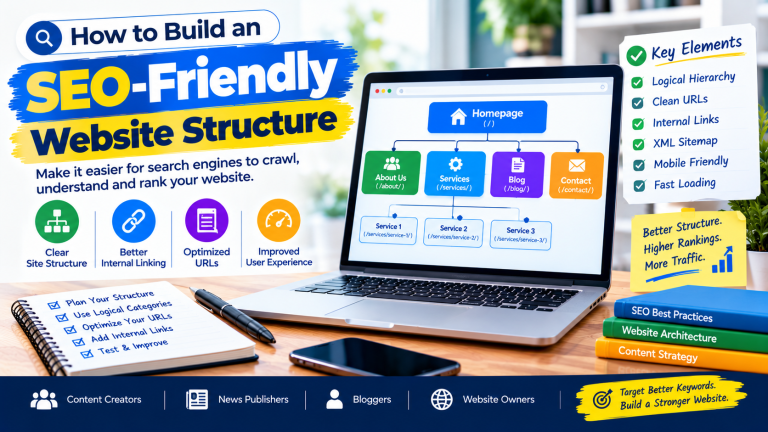
A business website might use a structure such as:
- Home
- About Us
- Services
- Website Design
- WordPress Development
- Website Maintenance
- Blog
- Portfolio
- Contact
Link relevant blog posts to useful service pages and connect related articles to one another.
Use descriptive anchor text rather than repeatedly using vague phrases such as “click here.”
For example, an article about website security could link to a relevant WordPress maintenance service page. The link should be helpful to readers and genuinely related to the content.
Do not add excessive internal links simply to increase their number. Prioritise links that improve navigation and help visitors discover useful information.
10. Ignoring Image Optimisation
Images can improve the appearance of a website, explain products and services, and help visitors understand information. However, poorly optimised images can slow pages and provide little context to search engines.
Uploading images with filenames such as IMG_0098.jpg or using meaningless alt text misses opportunities to make the content clearer and more accessible.
How to avoid this mistake
Before uploading an image:
- Give it a descriptive filename where practical.
- Resize it to suit its intended display dimensions.
- Compress it without unacceptable quality loss.
- Use an appropriate format.
- Write meaningful alt text for informative images.
- Use empty alt text for purely decorative images when appropriate.
- Place the image near relevant content.
For example, wordpress-website-design-kano.webp is more descriptive than IMG_0098.webp when the image genuinely depicts that subject.
Do not stuff keywords into filenames or alt attributes. Describe what the image actually shows.
11. Neglecting Website Security and HTTPS
Website security is important for protecting visitors, business information and the integrity of your online presence.
A website without properly configured HTTPS may display browser warnings or expose information transmitted between the visitor and the site. Compromised websites can also be abused to distribute spam or harmful content.
How to avoid this mistake
Install and correctly configure an SSL/TLS certificate, then ensure that your website consistently uses HTTPS.
Check for mixed-content warnings caused by pages that load images, scripts or stylesheets over insecure HTTP connections.
Also:
- Keep WordPress, themes and plugins updated.
- Use strong passwords and appropriate account permissions.
- Remove unused plugins and themes.
- Maintain reliable backups.
- Use reputable security tools.
- Investigate unexpected redirects, unfamiliar files and suspicious user accounts.
HTTPS is not a guarantee of high rankings, but it is an important part of a secure and trustworthy website experience.
12. Failing to Monitor SEO Performance
Some businesses publish content, install an SEO plugin and assume the work is complete. Without monitoring, they may not know whether Google is discovering their pages, which queries attract visitors or where technical problems exist.
How to avoid this mistake
Use Google Search Console to monitor:
- Search queries that generate impressions and clicks.
- Pages appearing in search results.
- Changes in impressions, clicks and click-through rate.
- Indexing issues and affected URLs.
- Relevant Core Web Vitals reports where available.
Use Google Analytics or another suitable analytics platform to understand what visitors do after reaching your website.
For example, if an article attracts visitors but few people proceed to the relevant service page, consider whether the content offers a useful next step. If an important service page receives few impressions, investigate its content, indexing status, keyword targeting and competition.

Review performance over meaningful periods instead of reacting to every daily fluctuation. SEO results can take time, and changes in demand, competition, website quality and search systems can all affect performance.
Additional SEO Mistakes to Watch Out For
Beyond the 12 mistakes above, Nigerian businesses should also avoid:
Buying spammy backlinks: Links acquired primarily to manipulate rankings can create risks. Focus on earning relevant mentions through useful resources, genuine partnerships and quality work.
Copying competitors: Use competitors to understand the market, not as a source of content to duplicate. Develop original information and explain your own expertise.
Creating misleading location pages: Only create location-specific pages when they serve real customers with useful, distinct information.
Ignoring customer questions: Search content should address the questions people actually ask before purchasing or contacting a business.
Expecting immediate results: SEO requires consistent improvement, monitoring and adaptation. Avoid providers who promise guaranteed first-page rankings.
A Practical SEO Checklist for Nigerian Businesses
Use this checklist to review your website and identify where to begin.
Research keywords that match your products, services and customers.
Write original, useful content for important pages.
Give each key page a clear SEO title and relevant meta description.
Make the website easy to use on mobile devices.
Improve loading speed and optimise images.
Set up Google Search Console.
Check that important pages can be crawled and indexed.
Submit and maintain a valid XML sitemap.
Build a logical website structure with relevant internal links.
Maintain accurate local business information where eligible.
Secure the website with HTTPS and keep software updated.
Monitor performance and improve pages based on evidence.
You do not need to fix every issue at once. Start with problems that prevent important pages from being discovered, pages that provide a poor experience, and content that does not meet customer needs.
Frequently Asked Questions About SEO for Nigerian Businesses
What are the most common SEO mistakes Nigerian businesses make?
Common mistakes include choosing irrelevant keywords, publishing weak content, ignoring local SEO, using slow or mobile-unfriendly websites, neglecting technical issues and failing to monitor results.
How can a small business in Nigeria improve its Google rankings?
Start by publishing useful content, targeting relevant search terms, improving your website’s usability, fixing technical issues and maintaining accurate local business information. Monitor results with Google Search Console and improve your strategy over time.
Is SEO better than social media marketing for Nigerian businesses?
They serve different purposes. SEO helps people discover relevant pages when searching, while social media can help businesses build communities, distribute content and communicate with customers. Many businesses benefit from using both channels together.
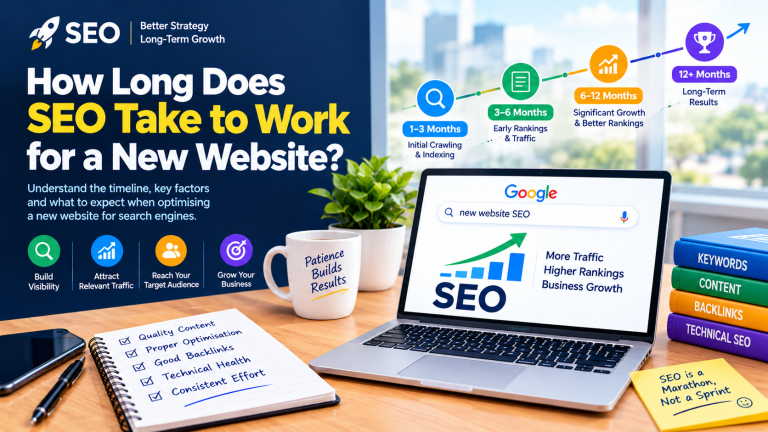
How long does SEO take to produce results?
There is no fixed timeline. Results depend on factors such as competition, website condition, content quality, technical health and the amount of work involved. Some improvements may become visible sooner than others, but meaningful growth often requires sustained effort.
Can I do SEO myself without hiring an agency?
Yes. Business owners can begin with keyword research, useful content, basic on-page optimisation, Google Search Console and local business profile management. More complex technical issues or competitive campaigns may require professional support.
Conclusion: Avoid Common SEO Mistakes and Build a Stronger Online Presence
SEO can help Nigerian businesses connect with people who are actively searching for their products and services. However, success is not simply about inserting keywords into pages or installing an SEO plugin.
A sustainable approach involves understanding customer needs, creating useful content, maintaining a fast and mobile-friendly website, fixing technical problems and measuring performance consistently.
Start by auditing your website, prioritising the most important issues and making improvements that benefit real visitors. Over time, a well-maintained website and a consistent SEO strategy can strengthen your online presence and support your business goals.
Need professional help with your business website? ENGRMKS & CO. provides website design, WordPress development, website maintenance and search engine optimisation services to help businesses build a stronger digital presence. Visit https://engrmks.com.ng/ to explore the available services.