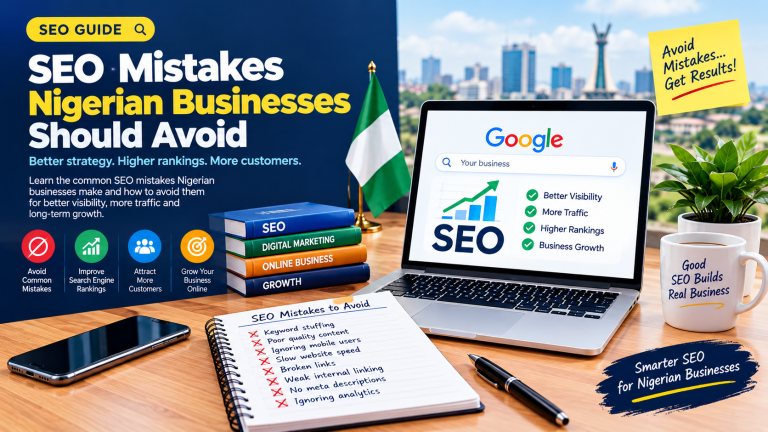
How Long Does SEO Take to Work for a New Website? A Realistic Timeline
Launching a new website is an important step towards building your business online. However, after publishing your pages, setting up your domain and installing an SEO plugin, you may discover that your website is barely visible on Google. This often leads to one important question: how long does SEO take to work for a new website?
The honest answer is that SEO does not follow a fixed timetable. Some pages may appear in Google’s search results within days or weeks, while meaningful improvements in rankings and organic traffic can take several months or longer. The timeline depends on factors such as your website’s technical condition, content quality, competition, industry, keyword targeting and the consistency of your optimisation efforts.
For Nigerian businesses, bloggers, entrepreneurs and website owners, understanding this process can help set realistic expectations and prevent costly mistakes.
In this guide, you will learn how long SEO typically takes, the difference between indexing and ranking, the factors that influence results, and the practical steps you can take to help your new website grow through organic search.
How Long Does SEO Take to Work for a New Website?
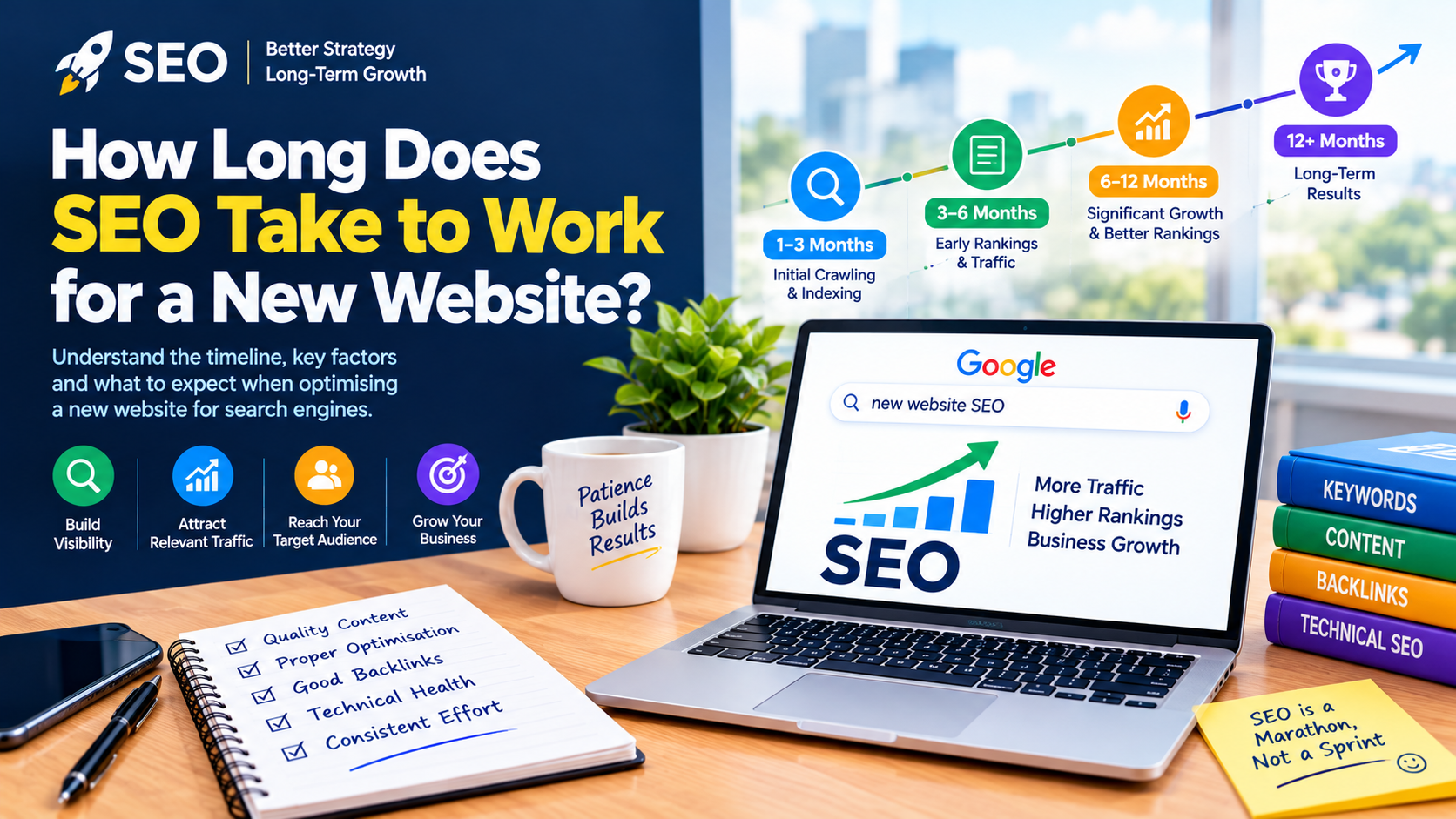
For planning purposes, a new website owner can use the following broad estimates. These are not guaranteed Google timelines; actual results may be faster or slower.
| Period after launch | What you might observe |
|---|---|
| First few days to 1 month | Technical setup, crawling and initial indexing may begin. |
| 1–3 months | Early impressions, initial keyword visibility and first organic visits may appear. |
| 3–6 months | Some pages may gain more consistent visibility and begin attracting relevant traffic. |
| 6–12 months | A well-maintained site may build stronger visibility and improve performance for selected keywords. |
| 12 months and beyond | Continued content improvements and authority-building may support further growth. |
These periods overlap, and some websites will not follow this pattern. A technically sound site targeting specific, less competitive searches may gain visibility sooner than a website competing for highly competitive national keywords.
Google itself explains that changes can take anywhere from hours to several months to affect search results. It recommends allowing a few weeks before assessing whether SEO changes have helped. There is no guaranteed date by which a new website will rank.
The key is to distinguish between getting a page indexed, appearing for relevant searches and achieving business results from organic traffic.
Understanding the Three Stages of SEO Results
Before deciding whether your SEO strategy is working, understand the difference between crawling, indexing and ranking.
1. Crawling: Google discovers your website
Crawling happens when Googlebot visits a page to retrieve its content. Google may discover your website through links from other websites, internal links or a submitted sitemap.
A new website with few links pointing to it may take time to be discovered. Make sure the site is accessible and that important pages are linked through clear navigation.
2. Indexing: Google processes your pages
After crawling a page, Google evaluates its content and other signals to decide whether it should be included in its search index.
Indexing does not guarantee high rankings. A page may be indexed but appear far down the results for its target keywords. Other pages may remain unindexed because of technical restrictions, duplication or content-related issues.
3. Ranking: Your pages compete in search results
Ranking is the process of determining which eligible pages appear for a particular search and in what order.
Your page competes with other relevant results. Google considers many signals when presenting results, so publishing an article or installing an SEO plugin alone cannot guarantee a first-page position.
Understanding these stages helps you identify whether your main problem is discovery, indexing, ranking or the ability to convert visitors into customers.
7 Factors That Affect How Long SEO Takes
1. Website age and history
A brand-new domain usually has less established search visibility than a website that has consistently published useful content and attracted relevant links over time.
However, domain age alone does not determine rankings. A new website can compete for appropriate searches when it provides relevant, useful information and meets the technical requirements for search visibility.
If you have just registered a domain in Nigeria, focus on building a sound website rather than expecting age itself to improve rankings.
2. Keyword competition
Some searches are more competitive than others.
For example, ranking for a broad phrase such as “digital marketing agency” may be more challenging than appearing for a specific, relevant search such as “WordPress website designer in Kano.”
The more established and relevant competing pages are, the harder it may be to outperform them.
What to do: Begin with specific keywords that match your services, target audience and actual operating locations. Expand to more competitive searches as your website develops useful content and visibility.
3. Content quality and relevance
Google needs to understand what your pages offer and whether they are relevant to users’ searches.
Thin service pages, copied descriptions and articles that do not answer the reader’s question may struggle to provide value.
Publish original content that addresses real customer needs. Explain your services clearly, answer common questions, demonstrate relevant experience and keep important information accurate.
There is no universal word count that guarantees rankings. A page should be as comprehensive as necessary to satisfy its purpose without adding unnecessary text.
4. Technical SEO
Technical problems can prevent search engines from discovering or properly processing your pages.
Common issues include:
- Accidental
noindexdirectives. - Incorrect robots.txt rules.
- Broken internal links.
- Incorrect canonical tags.
- Pages blocked by login requirements or server errors.
- Poor mobile usability.
- Slow-loading pages and inaccessible resources.
Use Google Search Console to inspect important URLs and review indexing reports. Fix problems that genuinely affect your website rather than making changes simply because an SEO tool displays a warning.
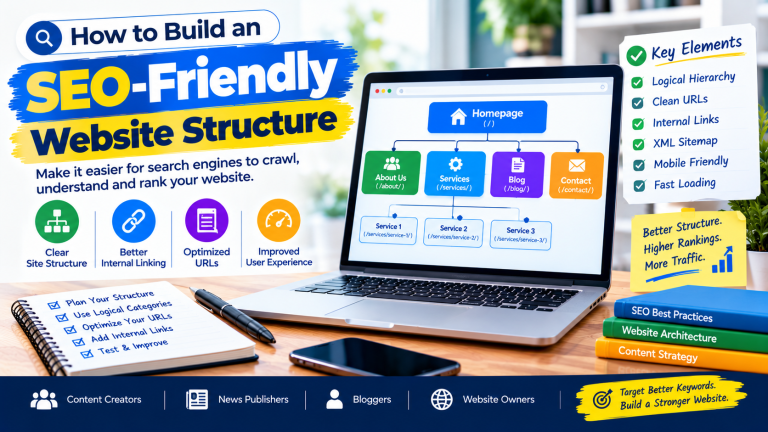
5. Website structure and internal links
A well-organised website makes it easier for users to find information and helps search engines discover relationships between pages.
For example, a Nigerian IT company might organise its website into services, portfolio projects, blog articles and contact information. Relevant articles should link to the services they discuss, while related articles should connect naturally to one another.
Create clear navigation and avoid leaving important pages isolated from the rest of the website.

6. Relevant links and business reputation
Links from relevant, trustworthy websites can help search engines discover your pages and provide useful context about your content. Genuine mentions, industry partnerships, useful resources and quality work can support a website’s reputation.
However, buying large numbers of manipulative backlinks is not a reliable shortcut. Such practices can create risk rather than sustainable growth.
Focus on earning relevant links naturally by publishing valuable resources, contributing useful expertise and building genuine professional relationships.
7. Consistency and competition
SEO is not a one-time activity. Competitors may publish better content, improve their websites or gain relevant mentions while you are working on your own pages.
Review your performance regularly, improve pages that are not meeting their goals and continue publishing content that serves your audience.
Consistency does not mean publishing articles every day regardless of quality. It means following a realistic plan and making informed improvements over time.
How to Help a New Website Get SEO Results Faster
Although you cannot control Google’s ranking systems, you can remove common obstacles and improve the quality of your website.
Step 1: Set up Google Search Console
Google Search Console helps you understand how Google sees your website.
After verifying ownership, use it to:
- Monitor indexing and search performance.
- Inspect individual page URLs.
- Identify indexing errors.
- Submit your XML sitemap.
- Review search queries, impressions and clicks.
- Monitor relevant page experience reports.
If you have just launched your site, inspect the homepage and your most important service pages first.
Step 2: Make sure important pages can be indexed
Check that your homepage, service pages and useful articles are accessible to search engines.
Review your robots.txt file, page-level robots directives, canonical tags and server responses. Confirm that you have not accidentally blocked important content during development.
A sitemap can help Google discover URLs, especially on a new website, but submitting one does not guarantee that every page will be indexed or ranked.
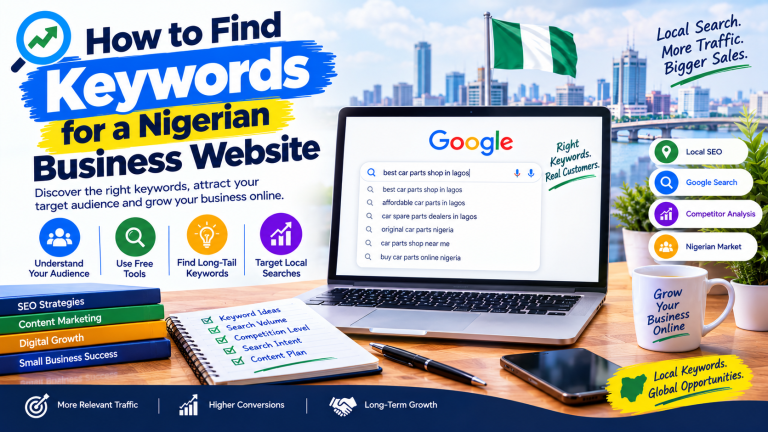
Step 3: Conduct practical keyword research
Identify the phrases your potential customers use when searching for your services.
For Nigerian businesses, these may include a service, product or relevant location. For example:
- Website design company in Kano.
- Reliable web hosting in Nigeria.
- Accounting services for small businesses.
- Affordable office furniture in Abuja.
These are examples, not verified search-volume findings. Research your own market before choosing keywords.
Use Google Search, Search Console when data becomes available, Google Trends and Google Keyword Planner to investigate relevant opportunities.
Avoid creating separate pages for every minor variation of a keyword. Each page should serve a meaningful purpose.
Step 4: Optimise your main pages
Give each important page a descriptive title, a clear main heading, useful content and a logical URL.
Explain your services, the customers you serve, the problems you solve and how people can contact you.
Use internal links to connect related content. Write meta descriptions that accurately summarise pages, remembering that Google may generate its own search snippets.
Step 5: Improve mobile performance and loading speed
Test your website on smartphones as well as desktop computers.
Compress oversized images, remove unnecessary scripts, review plugins and use reliable hosting. Google PageSpeed Insights can help identify performance issues and suggest improvements.
Prioritise problems that have a meaningful impact on usability rather than chasing a perfect score at the expense of functionality.
Step 6: Publish useful content regularly
Develop a content plan based on questions your customers ask.
For example, a website development company might publish guides on choosing a domain, maintaining a WordPress website, improving website security and fixing common indexing problems.
Link these articles to relevant service pages where it genuinely helps readers. This approach can help you build useful topic coverage and create more entry points to your website through search.
Step 7: Build a genuine online presence
Promote your website through relevant business directories, professional networks, industry communities, partnerships and social channels.
If your business serves a specific location and qualifies for a Google Business Profile, keep its details accurate and encourage genuine customer reviews.
Do not create fake business listings, purchase spammy links or misrepresent your service locations in an attempt to manipulate rankings.
How to Measure SEO Progress Before Rankings Improve
One mistake new website owners make is judging SEO entirely by whether a page appears on the first page of Google.
Rankings matter, but they are only one part of the process. Early indicators can help you understand whether your work is moving in the right direction.
Monitor these SEO metrics
Indexed pages: Are your important pages appearing in Google’s index?
Impressions: Is your website beginning to appear for relevant search queries?
Clicks: Are people visiting your website from organic search results?
Click-through rate: Are searchers clicking your results when they appear? Consider the query, position and search snippet before deciding what to improve.
Keyword visibility: Are relevant pages beginning to appear for more of your target searches?
Organic conversions: Are visitors submitting enquiries, calling your business, requesting quotations or making purchases?

Engagement and usability: Can visitors find the information they need and complete important actions?
Use Google Search Console to assess search performance and an appropriate analytics tool to measure visitor behaviour and conversions.
Compare results over meaningful periods. Small websites may have limited data during the first few months, so avoid drawing strong conclusions from a handful of impressions or clicks.
Why Is My New Website Not Ranking on Google After Three Months?
If your website has been online for three months without noticeable progress, do not assume that SEO has failed. Investigate the underlying cause.
Start by asking these questions:
- Is the website accessible to Googlebot?
- Are the homepage and important service pages indexed?
- Are there accidental noindex directives or blocking rules?
- Does each important page provide useful, original information?
- Are the selected keywords relevant and realistically competitive?
- Can visitors and search engines reach important pages through internal links?
- Is the website usable on mobile devices?
- Are search impressions increasing even if clicks remain low?
- Is the site affected by manual actions or security problems?
Use Search Console’s URL Inspection and Page Indexing reports to investigate specific issues. If a page is indexed but receives few impressions, review its relevance, content, keyword targeting and competition. If it receives impressions but few clicks, assess its position and how clearly its search result communicates value.
Three months is a useful point to review your strategy, not a universal deadline for success or failure.
Should You Pay for SEO Services for a New Website?
Professional SEO support may be useful if your website has technical problems, operates in a competitive market or requires a structured content strategy.
Before hiring an SEO provider, ask for a clear explanation of the work involved, how progress will be measured and what deliverables you will receive.
A responsible provider should be willing to discuss technical improvements, keyword research, content optimisation, reporting and realistic expectations. Be cautious of guaranteed first-page rankings, instant traffic promises or unexplained backlink packages.
SEO services should be evaluated against the website’s needs and business goals, not just the number of keywords promised.
For small Nigerian businesses working with limited budgets, it is reasonable to begin with essential technical checks, a few well-developed service pages and a manageable content plan, then expand as the business grows.
Frequently Asked Questions About SEO Timelines
Can a new website rank on Google in one month?
Yes, it is possible for a new website or individual page to appear for some searches within a month. However, indexing and ranking are different, and appearing for a low-competition search does not guarantee substantial traffic or first-page rankings for competitive keywords.
How long does Google take to index a new website?
There is no fixed timeline. Google may discover and index some pages within days or weeks, while others take longer or may never be indexed. Make sure your website is accessible, link important pages clearly, submit a valid sitemap and monitor progress in Search Console.
Does SEO work without backlinks?
A website can gain search visibility without actively building backlinks, particularly for relevant, less competitive searches. However, useful links and genuine mentions may help people discover your content and can contribute to your site’s overall search presence. Avoid manipulative link-building schemes.
Does installing an SEO plugin make a website rank faster?
No. An SEO plugin can help manage titles, meta descriptions, sitemaps and other settings, but it does not automatically make a website rank. Results depend on the overall quality, accessibility, relevance and competitiveness of your website and content.
How often should I publish articles for SEO?
There is no universal publishing frequency that guarantees rankings. Publish at a pace you can sustain while maintaining accuracy, originality and usefulness. A smaller number of well-planned articles may be more valuable than frequent, repetitive posts.
Is SEO worth it for a small business in Nigeria?
SEO can be worthwhile when potential customers search online for your products or services. Its value depends on your market, competition, website quality and ability to convert visitors into customers. Track enquiries and sales alongside traffic to understand its business impact.
Conclusion: SEO Takes Time, but the Right Strategy Matters
So, how long does SEO take to work for a new website? Some initial visibility may appear within weeks, while meaningful and consistent organic growth often requires several months of sustained effort. The exact timeline varies by website, market and competition, and no one can guarantee a specific ranking date.
The most effective approach is to build a technically sound website, publish useful content, target relevant keywords, improve mobile usability, create logical internal links and monitor performance using reliable data.
If your website is new, focus on getting the fundamentals right rather than searching for shortcuts. Review progress regularly, correct problems as they arise and keep improving the pages that matter most to your customers.
Need help improving your website’s search visibility? ENGRMKS & CO. provides website design, WordPress development, website maintenance and search engine optimisation services for businesses looking to strengthen their online presence.
Visit https://engrmks.com.ng/ to explore our services and learn how a well-planned website and SEO strategy can support your business growth.