


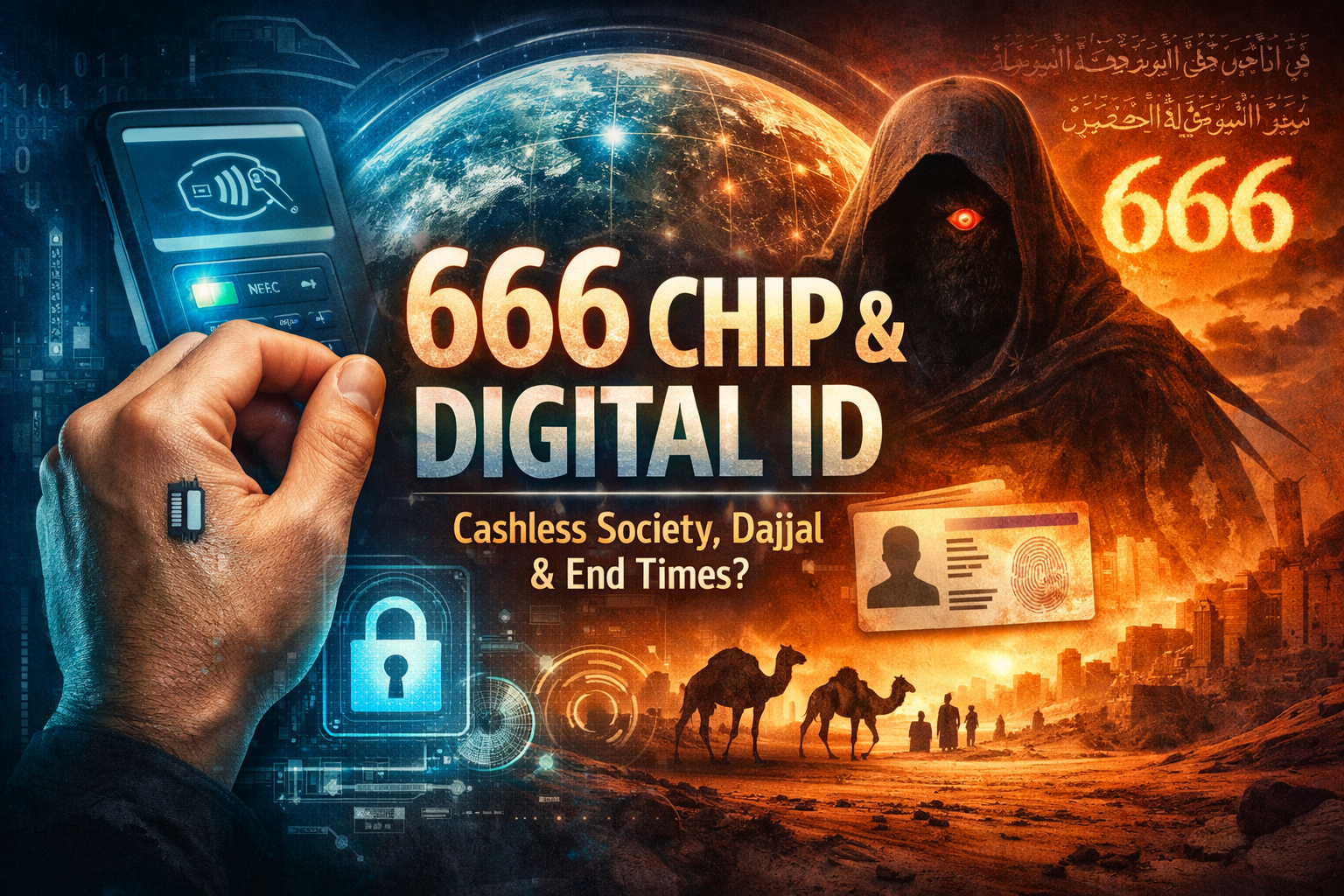
Is the “666 Chip” Real? Cashless Society, Digital ID & Dajjal Explained (Islamic Perspective & Modern Reality)
In recent years, conversations around the “666 chip,” digital identity systems, and cashless societies have become increasingly popular—especially among bloggers, content creators, and everyday internet users. Many people are asking:
- Is the world moving toward a system where you cannot buy or sell without a digital identity?
- Are microchip implants real?
- Is this connected to religious prophecies like the “Mark of the Beast” or Dajjal in Islam?
With the rapid rise of financial technology (fintech), mobile payments, and digital governance, these concerns are understandable. However, there is also a lot of misinformation, fear-based narratives, and confusion.
This article provides a balanced, well-researched, and SEO-friendly explanation—combining:
- Modern technological realities
- Religious perspectives (especially Islamic view of Dajjal)
- Practical insights for bloggers, creators, and the general public
Read also: Top Fintech Startups in Nigeria to Watch in 2025 (Innovation, Growth & Future Trends)
What Is the “666 Chip”? Where Did It Come From?
The concept of the “666 chip” originates from Christian biblical scripture, specifically the Book of Revelation, where “666” is referred to as the number of the beast.
Over time, this idea has evolved into modern interpretations such as:
- A microchip implanted in humans
- A digital ID required for transactions
- A global system controlling buying and selling
How It Became Popular Online
The rise of social media and digital platforms amplified theories linking:
- Cashless systems
- Biometric identification
- Microchip implants
to religious prophecy.
However, it is important to understand:
There is no verified evidence that any government or global institution is developing a “666 chip” for control or enforcement.
Understanding the Cashless Society
A cashless society is one where physical cash is replaced by digital payment methods such as:
- Mobile banking apps
- Debit/credit cards
- QR code payments
- Online transfers
Why the World Is Moving Toward Cashless Systems
- Convenience
Transactions are faster and easier. - Security
Reduced risk of physical theft. - Transparency
Helps reduce corruption and fraud. - Financial Inclusion
More people can access banking services via mobile phones.
Reality Check
A cashless society does not mean total control. It simply reflects technological evolution in financial systems.
Read also: Digital Payment Trends in Nigeria (2025): From USSD Codes to Virtual Cards and Beyond
What Is Digital ID?
A Digital Identity (Digital ID) is an electronic version of your identity. It can include:
- National ID numbers
- Bank Verification Numbers (BVN)
- Biometric data (fingerprints, facial recognition)
Common Uses of Digital ID
- Opening bank accounts
- Accessing government services
- Healthcare records
- Voting systems
Important Clarification
Digital ID:
- ❌ Is NOT a microchip
- ❌ Is NOT implanted in your body
- ✔ Is typically stored in databases or mobile devices
Human Microchip Implants: Facts vs Myths
Microchip implants do exist, but their current use is limited.

What They Actually Are
- Small RFID/NFC chips
- Inserted under the skin
- Used for:
- Access control (doors, offices)
- Contactless payments
- Identification
Key Facts
- They are optional, not mandatory
- They do not track GPS location
- They do not control the human mind
The Truth
While microchips are real, the idea that they are part of a global control system linked to “666” is not supported by evidence.
Why People Link Technology to Religious Prophecy
The connection between technology and prophecy comes from a pattern of interpretation, not direct evidence.
Common Assumptions
- “You need digital ID to transact”
- “Cash is disappearing”
- “Technology is controlling everything”
This leads to conclusions like:
“This must be the prophecy being fulfilled.”
The Problem
This approach:
- Mixes belief with speculation
- Often lacks verified sources
- Creates unnecessary fear
Read also: Web3 Explained: The Future of the Internet and Digital Ownership in 2025
Islamic Perspective: Understanding Dajjal
In Islam, Dajjal (the False Messiah) is one of the major signs of the Day of Judgment.
Who Is Dajjal?
- A real human being
- A deceiver with extraordinary abilities
- A major test (fitnah) for humanity
Key Characteristics
- Blind in one eye
- Performs deceptive miracles
- Misleads people with false promises
Dajjal and Control of Economy
One of the most important aspects of Dajjal’s power is:
Control over resources like food, wealth, and survival needs
He will:
- Reward followers with resources
- Punish those who reject him
Why This Sounds Familiar
This is why people relate Dajjal to:
- Cashless systems
- Digital ID
- Economic control
Does Islam Support the “666 Chip” Idea?
Clear Answer: No
Islamic teachings:
- Do not mention “666”
- Do not mention microchips
- Do not specify modern technology
What Islam Focuses On
- Faith (Iman)
- Truth vs deception
- Moral and spiritual tests
Can Technology Be Used in Dajjal’s Time?
Yes—But With Context
Technology is a tool, not inherently good or evil.
It can be used for:
- Convenience
- Development
- Control (if misused)
Balanced Understanding
- Technology may be part of future systems
- But it is not automatically Dajjal
Read also: How eSIM Technology is Changing Mobile Communication in Nigeria (2025 Guide)
The Real Danger: Not the Chip, But Deception
Islam teaches that the greatest threat is:
- Weak faith
- Blind following
- Being deceived by false promises
Protection in Islam
- Reciting Surah Al-Kahf
- Seeking knowledge
- Strengthening belief
Digital ID & Cashless Systems in Nigeria and Africa
In countries like Nigeria:
- Digital payments are growing rapidly
- Mobile apps are leading financial inclusion
- Cash is still widely used
Reality on Ground
- No microchip system in use
- Digital ID is mainly database-based
- Adoption is driven by convenience, not control
For Bloggers & Content Creators: What You Should Know
If you create content around this topic:
1. Avoid Spreading Fear
Unverified claims reduce credibility.

2. Focus on Facts
Explain:
- What is real
- What is belief
- What is speculation
3. Balance Religion & Technology
Respect religious perspectives while staying factual.
4. Create Value-Driven Content
Topics that perform well:
- “Future of cashless payments in Africa”
- “Digital ID explained simply”
- “Dajjal signs vs modern reality”
Common Myths Debunked
Myth 1: The 666 Chip Already Exists
❌ No verified evidence
Myth 2: Digital ID Is a Religious Mark
❌ It is a technological system
Myth 3: Microchips Control Humans
❌ No scientific proof
Myth 4: Cashless Means Total Control
❌ It depends on implementation and governance
Future Outlook: What to Expect
Short Term
- Growth in mobile payments
- Expansion of digital ID systems
Long Term
- More integration of technology in daily life
- Increased discussions around privacy and control
But Not Likely Soon
- Mandatory human microchips
- A single global control system
Final Conclusion
The idea of a “666 chip” is largely a modern interpretation influenced by religious symbolism and online narratives.
What Is True
- The world is becoming more digital
- Cashless systems are growing
- Digital ID is expanding
What Is Not Proven
- No global “666 chip” system
- No forced implant program
- No direct link between digital ID and religious prophecy
Islamic Perspective Summary
- Dajjal is real
- His test is about faith and deception
- Technology may play a role—but it is not the core issue
Closing Thought
As technology evolves, the best approach is not fear—but understanding.
Stay informed. Stay balanced. Strengthen your knowledge—both technical and spiritual.